

You don’t
have to use mineral spirits or turpentine to clean your palette and get rid of the excess oil paint. In fact you
don’t have to use any hazardous or complicated cleaning agent at all. The best way to clean a
palette is actually by using ordinary baby oil. Here is how you do it.
First wipe away the excess paint that remains on the palette using your palette knife. I like the broader, angular type that you see in the picture. It works well for scraping up the smallest amount of paint on the palette. If you don't have a palette knife, I can really recommend that you buy one. It's not expensive and handling paint becomes much easier.
 |
| A few drops of baby oil is enough |
Then you simply dab a few drops of baby oil on the palette. The more paint you remove with your palette knife in the first stage, the less baby oil is needed now.
There are several baby oils on the market, but I'm not aware of any oils that are better than others. However, you might want to avoid the overly perfumed ones, or else your whole studio will start smelling like a kindergarten.
Finally, wipe the palette clean using a paper towel. If you have a palette with a rougher structure it is better to use a lint free cloth instead since paper towels are easily torn by the wooden fibers. I use a palette with a lacquered finish which is perfect to clean with paper.
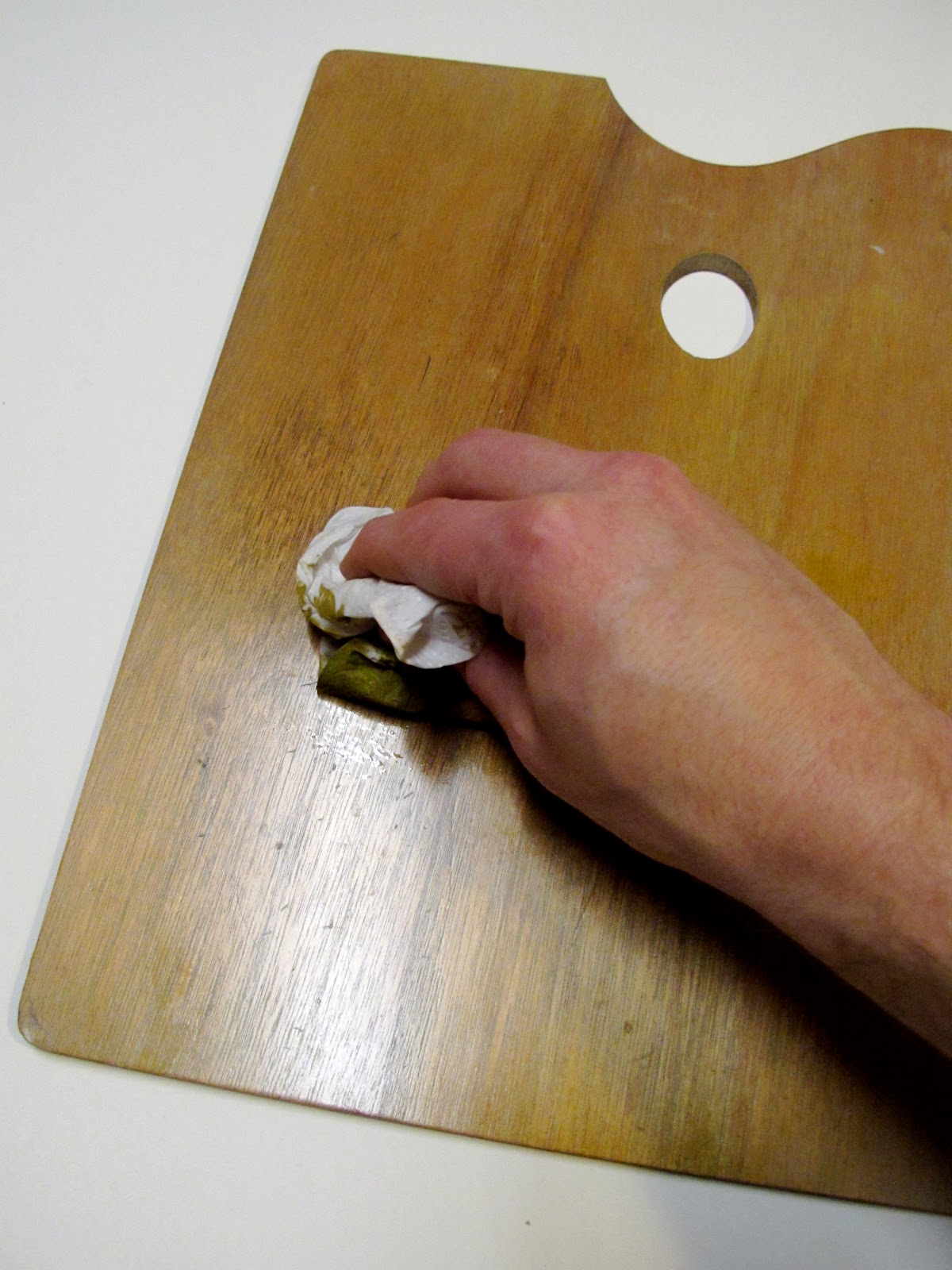 |
| All that remains is a nice, clean palette |
